Eating for Balance: A Practical Guide to Nutrition That Sticks
Nutrition advice is everywhere, and much of it pulls in opposite directions. One week it's one approach, the next it's something completely different. After hearing enough of it, most people stop listening — and that's exactly when good nutrition matters most.
Here's the perspective we share with our patients: nutrition isn't a test you pass or fail. It's a pattern you live inside, day after day. When the pattern is sound, the occasional "off" meal doesn't matter. Here's how to build that pattern in a way that actually sticks.
Balance is a shape, not a scorecard
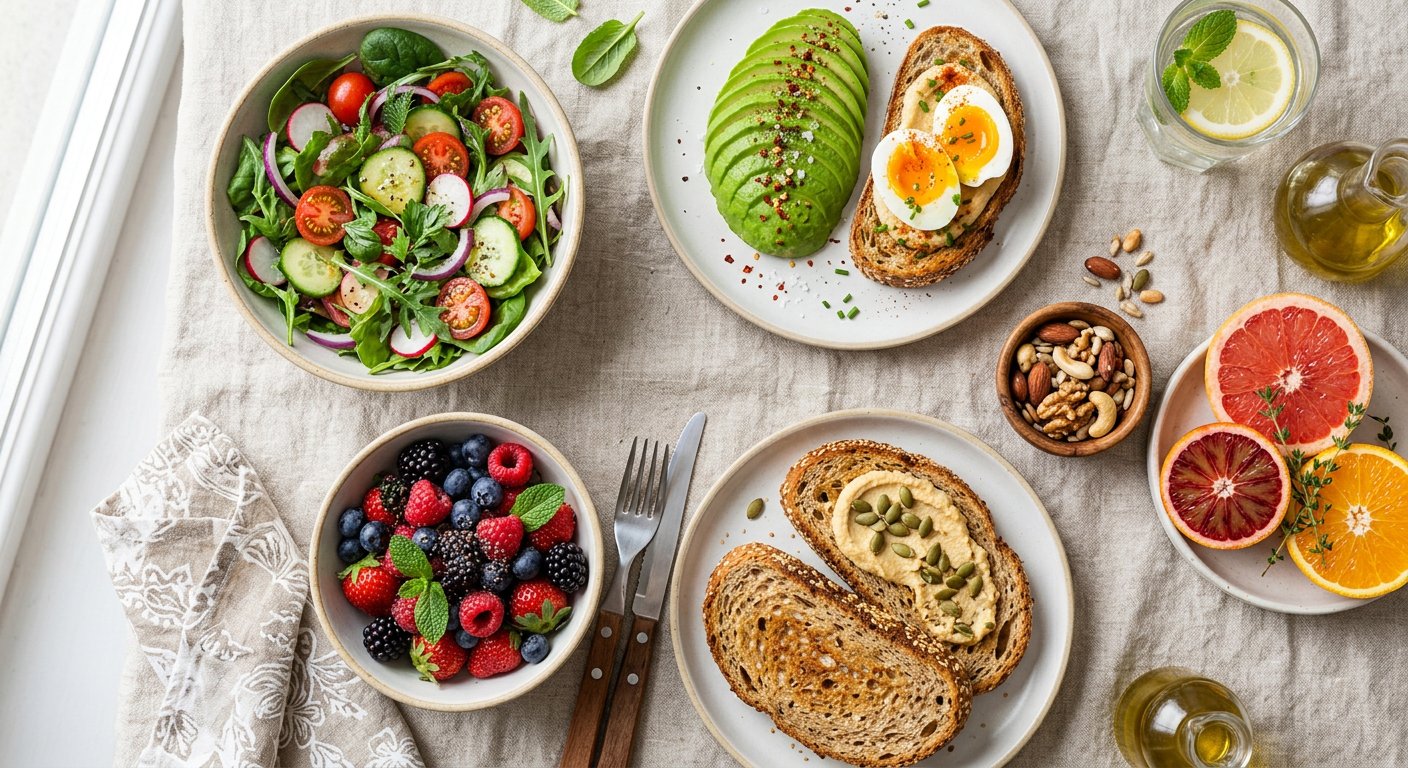
Think of a balanced plate as having a simple shape rather than a strict formula. In the middle of the plate: a source of protein — think fish, eggs, beans, poultry, or tofu. Around it: vegetables and fruit in plenty, a portion of whole grains or starchy vegetables, and a little healthy fat to keep you satisfied.
That shape is flexible enough to hold a family dinner, a packed lunch, or a weeknight takeout night (choose the one with vegetables in it). When the overall pattern follows the shape most of the time, your body gets what it needs — without a single meal having to be perfect.
Fill half the plate, and don't fear the rest
The single easiest change we recommend is this: let vegetables and fruit take up half of what's on your plate. Not all the time, not all day — just make it the starting point of most meals.
The rest of the plate is where your life happens. You don't need to eliminate the foods you enjoy; you need to make them share the table with the foods that keep you steady. That's the difference between a diet you endure and an eating pattern you keep.
Hydration is a habit, not a chore
Water is the most underrated habit on this list. Keeping a bottle or a glass of water within reach — on the desk, by the bed, next to the coffee maker — removes the decision every time. A drink of water with each meal is a small anchor that adds up.
You don't need fancy flavorings or complicated schedules. If you're thirsty, you're probably a little behind — which is the whole signal, so simply drink.
What your heart and gut are asking for
Two of the quietest beneficiaries of a balanced pattern are your cardiovascular system and your digestive health. Both respond well to the same simple shifts:
- More fiber — vegetables, fruit, beans, and whole grains keep digestion comfortable and your energy steady.
- Less ultra-processed food — not as a rule, but as a gradual drift. Cooking a few more meals at home than last month is real progress.
- Healthy fats in place of empty ones — olive oil, nuts, and avocados do more for your heart than most people realize.
If you manage blood pressure, cholesterol, or a heart condition with our team, these same principles become part of your medical care plan — we'll tailor the details to you.
A plate that works
- Half the plate: vegetables and fruit, most meals
- A source of protein at every meal, not just dinner
- Whole grains and starchy vegetables as your energy base
- A little healthy fat to keep you satisfied and steady
- Water within reach, drink with each meal
Planning without perfection
The people who eat well long-term don't have flawless meal plans. They have a simple rhythm:
- Plan around what's already in the house. A shopping trip that tops up, rather than one that rebuilds, is the one you'll actually repeat.
- Keep a small pantry of reliable staples. Canned beans, frozen vegetables, whole grains, eggs — the ingredients that make a decent meal in minutes on hard days.
- Batch one thing, not everything. A pot of soup, a tray of roasted vegetables, or a big bowl of salad that feeds several lunches takes most of the pressure out of weeknights.
When to bring in a professional
General principles are a wonderful start, but your body has its own story. It's worth talking with our wellness and nutrition team if you're noticing unexplained weight changes, persistent digestive discomfort, low energy that rest doesn't fix, or if you have a specific goal — like managing your weight, your blood pressure, or an eating pattern around a medical condition.
A personalized assessment turns "eat better" into a plan with your actual meals, your actual schedule, and your actual goals at its center. That's how nutrition stops being advice and starts being care.
Ready for a plan that fits your table?
Our wellness and nutrition team builds eating plans around your real life — book a visit and let's get started.